Intraday trading is one of the most talked-about ways to trade in the stock market. Many beginners are attracted to it because of the possibility of making profits within a single day. But at the same time, intraday trading can be risky if done without proper knowledge, discipline, and planning.
If you are new to the stock market and curious about intraday trading, this guide is written just for you. In this blog, we will explain what intraday trading is, the basic rules you must follow, practical tips for beginners, and common mistakes you should avoid. The goal is to help you start intraday trading with clarity and confidence.
What Is Intraday Trading?
Intraday trading means buying and selling stocks on the same trading day. In simple words, you do not carry your position overnight. All trades are squared off before the market closes.
For example:
You buy shares of a company at 10:30 AM
You sell the same shares before 3:30 PM on the same day
Any profit or loss you make is realized on that day itself.
Intraday trading is also known as day trading and is mostly focused on capturing small price movements rather than long-term growth.
How Is Intraday Trading Different from Delivery Trading?
Understanding this difference is important for beginners.
| Intraday Trading | Delivery Trading |
|---|---|
| Buy and sell on the same day | Shares are held for days, months, or years |
| Higher risk | Lower risk compared to intraday |
| Requires constant monitoring | Less monitoring needed |
| Profits from small price moves | Profits from long-term growth |
| Uses margin (leverage) | No leverage |
Intraday trading is more suitable for active traders, while delivery trading is ideal for long-term investors.
Key Rules for Intraday Trading (Beginners Must Follow)
1. Always Close Positions on the Same Day
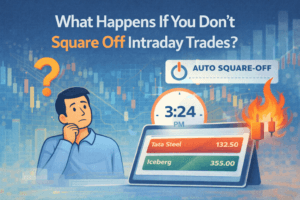
This is the most important rule. Intraday positions cannot be carried forward. If you forget to square off, your broker will automatically close the trade, often with extra charges called auto-square-off charges.
👉 Always exit your trades before the auto square-off time set by your broker.
2. Use a Strict Stop-Loss
A stop-loss helps limit your losses if the market moves against you.
For example:
You buy a stock at ₹100
You set a stop-loss at ₹97
If the price falls to ₹97, your trade is automatically exited, protecting you from bigger losses.
Never trade without a stop-loss, especially as a beginner.
3. Trade Only Liquid Stocks
Liquidity means how easily you can buy or sell a stock without affecting its price.
For intraday trading:
Choose high-volume stocks
Avoid penny stocks
Stick to stocks from indices like Nifty 50 or Sensex
High liquidity ensures faster execution and smaller price gaps.
4. Avoid Overtrading
Many beginners make the mistake of placing too many trades in a single day.
More trades ≠ more profits.
Overtrading often leads to:
Higher brokerage costs
Emotional decisions
Bigger losses
👉 Quality trades are always better than quantity.
5. Follow Market Timings Carefully
The Indian stock market is open from 9:15 AM to 3:30 PM.
First 15–20 minutes can be very volatile
Mid-day is usually calmer
Last hour often sees good movement
As a beginner, avoid trading in extreme volatility until you gain experience.
Essential Intraday Trading Tips for Beginners
1. Start with Small Capital
Never start intraday trading with a large amount.
Begin with:
An amount you can afford to lose
Small position sizes
This helps you learn without emotional pressure.
2. Have a Clear Trading Plan
Before entering any trade, you should know:
Entry price
Target price
Stop-loss level
If you don’t have these three, don’t take the trade.
3. Focus on One or Two Stocks Only
Instead of tracking many stocks:
Select 1–2 stocks
Understand their price movement
Observe how they react to news and market trends
This improves decision-making and confidence.
4. Don’t Chase Tips or WhatsApp Messages
Many beginners lose money by following random tips from:
Telegram channels
WhatsApp groups
Social media influencers
Most of these tips are unreliable.
👉 Always do your own analysis.
5. Control Your Emotions
Fear and greed are the biggest enemies in intraday trading.
Fear makes you exit early
Greed makes you hold losing trades
Successful traders follow rules, not emotions.
Common Mistakes Beginners Should Avoid
1. Trading Without Knowledge
Intraday trading is not gambling. Jumping into trades without understanding charts, trends, or basic indicators often leads to losses.
2. Ignoring Risk Management
Many beginners focus only on profits and ignore risk.
A good rule:
Risk only 1–2% of your capital per trade
This ensures long-term survival in the market.
3. Holding Loss-Making Trades
Hoping that a losing trade will turn profitable is dangerous.
Remember:
“Small losses are part of trading. Big losses are optional.”
4. Trading Every Day
You don’t need to trade daily. Some days offer better opportunities than others.
👉 It’s okay to stay out of the market if there’s no clear setup.
5. Ignoring Trading Costs
Intraday trading involves costs like:
Brokerage
STT
Exchange charges
GST
Stamp duty
Frequent trading without calculating costs can wipe out profits. You can read more about trading charges in our blog post, Hidden Stock Market Charges Most Traders Don’t Know
Is Intraday Trading Suitable for Beginners?
Intraday trading can be suitable for beginners, but only if:
You start small
You follow strict rules
You focus on learning, not earning
You practice discipline
If you are looking for quick money, intraday trading is not recommended. But if you are ready to learn patiently, it can be a valuable skill.
Conclusion: Start Smart, Trade Safely
Intraday trading offers exciting opportunities, but it also comes with significant risks. For beginners, the key is not to rush into profits but to focus on learning, discipline, and consistency.
Let’s quickly recap:
Understand what intraday trading is
Follow basic trading rules
Use stop-loss every time
Avoid emotional and impulsive decisions
Learn from mistakes and improve gradually
If you approach intraday trading with the right mindset and proper risk management, it can become a rewarding journey over time.
👉 Start small, stay disciplined, and keep learning.